

Thinking about buying jewellery in India but not sure where to start? This jewellery buying guide in India will help you understand what to check before purchasing gold, silver, or diamond jewellery.
Buying jewellery in India is never just about fashion. It is emotional. It is about family, tradition, weddings, and special moments. At the same time, it is also about money. Many people see jewellery as a form of saving and long-term security.
The reason you are buying jewellery makes a big difference. Jewellery for daily wear should be strong and practical. Wedding jewellery is usually heavier and more detailed. Festival purchases, especially during occasions like Akshaya Tritiya or Diwali, are often linked to good luck and prosperity. Investment jewellery, on the other hand, should focus more on purity and resale value rather than design.
In this complete jewellery buying guide in India, you will learn the difference between buying for daily wear, weddings, festivals, and investment. You will also understand how to choose between gold, silver, and diamonds, what to check before paying, and how to avoid common mistakes.

What Are the Main Types of Jewellery in India?
According to jewellery buying guide in India, the three main types of jewellery are gold, silver, and diamond. Your choice depends on budget, occasion, durability, and long-term value.
Gold Jewellery: Is It Best for Tradition and Investment?
Gold jewellery is deeply connected to Indian culture and is also considered a safe investment.
Common Gold Purity Types
| Gold Type | Purity | Best For | Investment Suitability |
| 22K | 91.6% | Bridal & traditional jewellery | High |
| 18K | 75% | Diamond-studded & modern designs | Moderate |
| 14K | 58.5% | Daily wear | Lower |
If you are confused about purity, durability, and pricing, read How to Buy Gold in India: 22K vs 18K, Making Charges & Investment Guide for a detailed 22K vs 18K comparison.
What About Making Charges and Investment Value?
Making charges can range from 5% to 25% depending on design complexity. These charges are usually not fully recovered during resale.
Gold coins and bars are generally better if your main goal is investment rather than fashion.
Silver Jewellery: Is 925 Silver Good for Daily Wear?
Silver jewellery is affordable, trendy, and suitable for everyday use.
What Is 925 Silver?
925 silver means 92.5% pure silver mixed with 7.5% other metals for strength. It is strong enough for daily wear but may need polishing over time.
To understand 925 purities in detail, read Silver Jewellery in India: Is 925 Silver Good for Daily Wear & Investment?
Is Silver Durable and a Good Savings Option?
Silver is:
- Budget-friendly
- Popular for oxidised and ethnic styles
- Easy to buy in small quantities
Silver is not as stable as gold, but it can still work as a small-scale savings option.
Diamond Jewellery: How Do You Choose the Right Stone?
Diamonds are usually chosen for engagements, weddings, and milestone gifts.
Natural vs Lab-Grown Diamonds
| Type | Origin | Price | Resale Value |
| Natural | Formed over millions of years | Higher
|
Stronger |
| Lab-Grown
|
Created in labs | 30–40% cheaper | Lower
|
Both look similar, but long-term value differs.
What Are the 4Cs?
| Factor | Meaning | Why It Matters |
| Cut | Shape and polish | Determines sparkle |
| Colour | Whiteness level | Higher grade means higher value |
| Clarity | Internal flaws | Fewer flaws increase price |
| Carat | Weight | Bigger stones cost more |
For a complete explanation of the 4Cs (Cut, Colour, Clarity, Carat), read Diamond Buying Guide in India: Avoid Mistakes & Understand the 4Cs.
Why Is Certification Important?
Always buy diamonds certified by trusted labs such as:
- Gemological Institute of America (GIA)
- International Gemological Institute (IGI)
Certification protects you from overpaying and helps avoid common buying mistakes.
Checklist Before Buying Jewellery
- Decide your purpose (wedding, daily wear, or investment).
- Check purity marks (916, 925, diamond certificate).
- Understand making charges and resale value.
- Compare prices at multiple stores.
- Ask for a proper bill and certification copy.
Which Jewellery Category Is Right for You?
Gold is best for tradition and long-term value, silver suits affordable daily fashion, and diamonds are ideal for luxury and milestone occasions. Your final choice should match your budget, purpose, and financial goal.

How Should You Buy Jewellery Based on Purpose?
In this jewellery buying guide in India, jewellery purchases often depend on the purpose, such as daily wear, weddings, or festivals. Choosing the right jewellery type helps balance durability, style, and long-term value.
Daily Wear Jewellery
Daily wear jewellery should be lightweight, durable, and comfortable for everyday use. Many buyers prefer pieces that match both traditional and modern outfits.
Popular daily wear options include:
- Lightweight gold jewellery: Durable and suitable for everyday styling
- 18K diamond pieces: Stronger gold mix that securely holds diamonds
- 925 silver jewellery: Affordable and stylish for casual outfits
Bridal & Wedding Jewellery
Bridal jewellery in India focuses on heritage designs, symbolism, and long-term value. Wedding jewellery is usually heavier and made from high-purity gold.
Common bridal jewellery choices include:
- 22K heavy gold jewellery: Traditional bridal investment
- Temple jewellery designs: Cultural heritage designs for weddings
- Diamond bridal necklace sets: Luxury modern wedding jewellery
Festival & Occasion Jewellery
Festivals and special occasions are considered the most auspicious time to buy jewellery in India. Many families plan purchases during traditional celebrations.
Common jewellery buying occasions include:
- Akshaya Tritiya
- Deepavali
- Wedding season purchases
These days are believed to bring prosperity, making them popular for gold and diamond purchases.
For festival buying strategies, auspicious days, and gifting ideas, read Festival & Occasion Jewellery in India: Best Gold & Diamond Picks.
How to Choose the Right Jewellery for Your Purpose
- Identify the purpose such as daily wear, wedding, or festival.
- Choose the right metal based on durability and budget.
- Check purity marks or diamond certification.
- Compare making charges across jewellers.
- Always request a detailed bill and authenticity proof.
How Do You Choose the Right Jewellery for Every Occasion?
The best jewellery choice depends on the occasion like lightweight gold, diamonds, and silver for daily wear, traditional 22K gold for weddings, and auspicious purchases during festivals like Akshaya Tritiya and Deepavali.
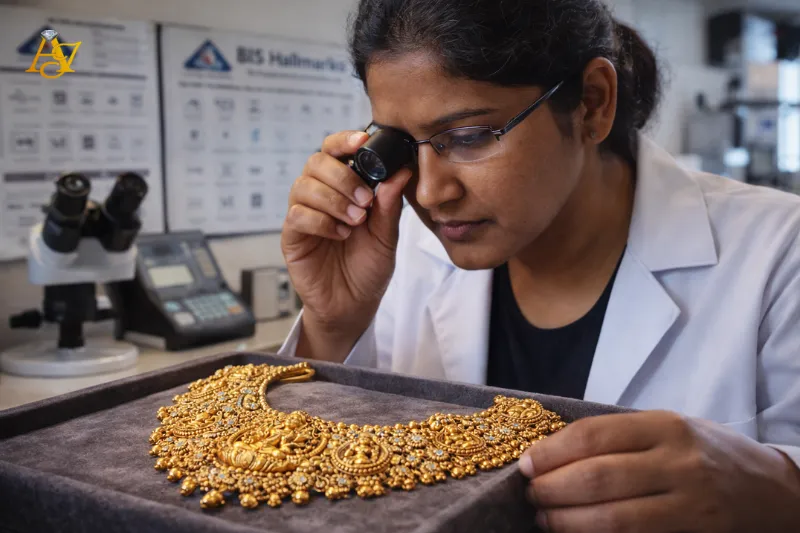
How Can You Check Jewellery Authenticity in India?
This jewellery buying guide in India recommends checking jewellery authenticity through purity marks, certification, and purchase documents. Gold should have a BIS hallmark, silver should carry a 925 stamp, and diamonds should come with trusted certification.
Jewellery Authenticity Marks in India
| Jewellery Type | Authenticity Mark | What It Confirms |
| Gold | BIS Hallmark | Government-certified purity |
| Silver | 925 Stamp | 92.5% pure silver |
| Diamond | GIA / IGI Certificate | Verified diamond quality |
Checklist to Verify Jewellery Authenticity
- Check the BIS hallmark on gold jewellery.
- Look for the 925-purity stamp on silver pieces.
- Ask for diamond certification from GIA or IGI.
- Request a detailed invoice with purity and pricing breakdown.
- Confirm the jeweller's buyback or exchange policy.
What Is the Safest Way to Buy Authentic Jewellery in India?
The safest way to buy authentic jewellery in India is to verify purity marks, request proper certification, and always purchase from trusted jewellers who provide detailed invoices and transparent buyback policies.
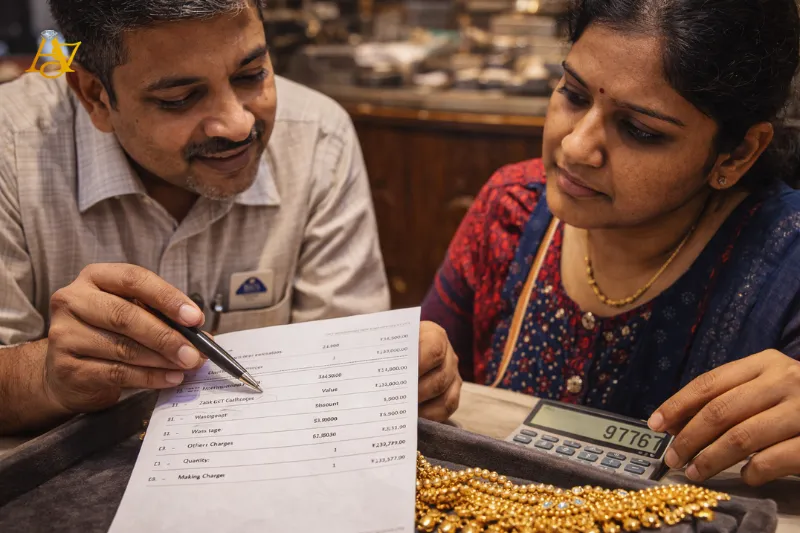
What Are Making Charges, Wastage, and Hidden Costs in Jewellery?
In this jewellery buying guide in India, it is important to understand that the price of jewellery includes more than just the gold or diamond value. Jewellers add making charges, wastage charges, and GST, which increase the final bill.
Knowing these costs helps buyers compare prices between stores and make smarter purchasing decisions.
What Are Making Charges in Jewellery?
Making charges are the labour costs required to design and craft jewellery. These charges cover processes like moulding, carving, polishing, and stone setting.
Jewellery with complex designs requires more craftsmanship, which increases making charges.
Typical Making Charges in India
| Jewellery Type | Average Making Charges |
| Simple gold chain | 5% – 10% |
| Rings or earrings | 8% – 15% |
| Designer jewellery | 15% – 25% |
| Bridal jewellery | 20% – 35% |
Simple jewellery pieces generally have lower labour costs, while temple or bridal jewellery often has higher making charges.
Fixed Making Charges
- A fixed amount per gram of gold
- Does not change with gold price fluctuations
- Often used for lightweight jewellery
Fixed charges can sometimes make pricing more transparent for buyers.
Have you ever tried negotiating the charges when buying jewellery?
Absolutely! Many jewellery stores are happy to discuss making charges, especially during sales or festive seasons.
Tips to Reduce Making Charges
- Compare jewellery prices across multiple stores.
- Ask about festival offers and seasonal discounts.
- Choose simpler designs with less labour-intensive work.
- Buy during festive gold-buying occasions, such as Akshaya Tritiya.
- Ask about loyalty discounts or membership benefits.
Negotiating even a 2–5% reduction on making charges can significantly reduce the total jewellery price.
What Is Wastage in Jewellery Making?
Wastage refers to the small amount of gold lost during the jewellery manufacturing process. This happens when gold is cut, melted, shaped, or polished.
Jewellers often charge wastage to compensate for this loss.
Typical Wastage Charges
| Jewellery Type | Wastage Range |
| Machine-made jewellery | 3%–7% |
| Handmade jewellery | 5%–10% |
| Temple or antique jewellery | 10%–15% |
However, many modern jewellery brands now include wastage inside making charges instead of charging separately.
Step-by-Step Checklist to Avoid Hidden Jewellery Costs
Follow these steps before purchasing jewellery:
- Check the gold purity and BIS hallmark.
- Ask the jeweller for the making charge percentage or fixed rate.
- Confirm whether wastage charges are included.
- Calculate the GST amount on gold and making charges.
- Compare prices from at least two jewellery stores.
- Ask for a detailed invoice with a cost breakdown.
This simple checklist ensures buyers pay the right price and avoid hidden costs.

What Is the Smart Jewellery Buying Checklist Before Purchasing?
According to jewellery buying guide in India, a smart jewellery buying checklist helps buyers avoid hidden costs, verify authenticity, and choose the right jewellery for their needs. Whether purchasing gold, silver, or diamonds, checking a few key factors ensures you get genuine jewellery at the right price.
Following a simple checklist also makes it easier to compare jewellery stores and understand the true value of your purchase.
Smart Jewellery Buying Checklist
- Check jewellery purity: Ensures the metal quality is genuine and meets official standards.
- Ask for certification: Confirms the authenticity of gold, silver, or diamonds.
- Compare making charges: Helps you avoid paying unnecessary labour costs.
- Buy according to purpose: Choose jewellery suitable for daily wear, weddings, or investment.
- Keep the invoice safe: Important for resale, exchange, warranty, or future upgrades.
This checklist helps buyers make smart and confident jewellery purchases while avoiding hidden costs or authenticity issues.
Conclusion: How Can You Make a Smart Jewellery Purchase in India?
Buying jewellery in India is both a cultural tradition and a financial investment. This jewellery buying guide in India highlights the importance of verifying purity, checking certifications, comparing making charges, and always requesting a proper invoice.
By following a simple checklist and understanding factors like purity, pricing, and certification, readers can better learn how to choose jewellery for daily wear, special occasions, or long-term value. Learning these basics ensures that jewellery decisions are informed, transparent, and reliable.
If you want to learn more about gold, silver, or diamond jewellery for festivals like Akshaya Tritiya, explore our jewellery education guides at Alfa Jewellers to better understand purity, pricing, and smart jewellery selection.




Article
Complete Jewellery Buying Guide in India: Gold, Silver & Diamond Tips for Smart Buyers
Discover a complete jewellery buying guide for India covering gold purity, silver quality, diamond 4Cs, making charges, and practical tips to help buyers understand jewellery better.