

Have you ever wondered whether your next gold purchase truly holds value for every penny? Many buyers unknowingly make Gold Buying Mistakes that reduce the real worth of their investment.
In India, gold represents tradition, serves as a keepsake for generations, and remains a trusted way to store value. However, common Gold Buying Mistakes such as ignoring purity checks, trusting unclear certifications, or overlooking hidden charges can slowly diminish what seems like a smart investment. Sometimes the design costs more than the gold itself.
By understanding these Gold Buying Mistakes, you can make every purchase with greater confidence. This way, the gold you bring home will hold both financial value and emotional significance. Think of it not just as buying gold jewellery, but as securing your future wisely.
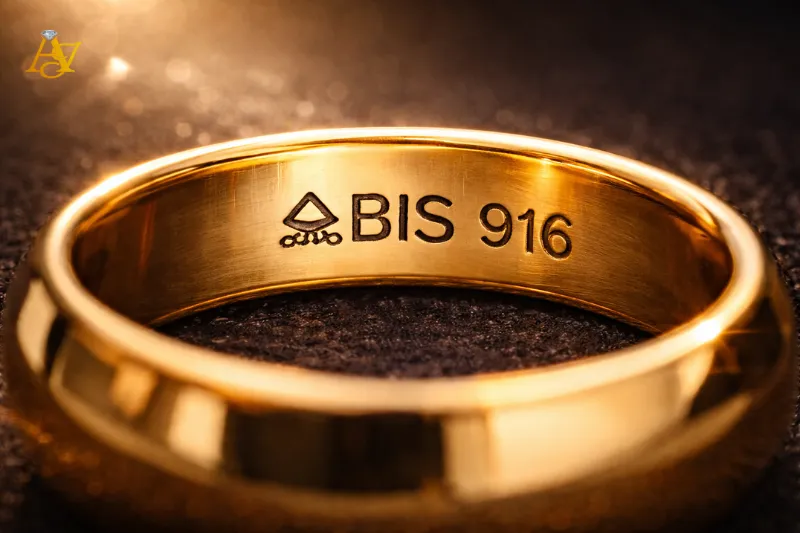
Are You Buying Gold Without Checking the BIS Hallmark?
In India, skipping the BIS hallmark check is a serious mistake because the hallmark is the proof that your gold is genuine and certified for purity.
Many buyers trust the seller's words and forget to verify the mark on the jewellery itself. This can lead to paying full price for gold that does not meet the promised purity.
Why Is the BIS Hallmark Important?
The BIS hallmark confirms that the gold has been tested and certified under the standards set by the Bureau of Indian Standards.
It protects buyers from fraud and ensures transparency in gold purchases. Without this certification, there is no official guarantee of purity.
What Should You Look for in a BIS Hallmark?
When buying gold jewellery, check for these three important markings:
- BIS Logo
The official symbol showing the jewellery is certified.
- Purity Mark
Indicates the gold's purity level.
Examples: 22K916 for 22-karat gold, 18K750 for 18-karat gold.
- HUID Number
A unique six-digit alphanumeric code used for traceability and authenticity verification.
BIS Hallmark Components
When you check a gold jewellery piece, make sure these three markings are present and clear.
| Marking | What It Indicates | Why It Is Important |
| BIS Logo | Official certification symbol | Confirms the gold has been tested under government standards |
| Purity Mark | 22K916, 18K750, etc. | Clearly shows the percentage of gold in the jewellery |
| HUID Number | Unique alphanumeric code | Helps verify authenticity and track the piece |

Are You Mixing Up Karat and Carat?
Karat and carat may sound the same, but they mean two completely different things in jewellery.
Karat tells you how pure the gold is, while carat tells you how heavy a gemstone is.
Many people confuse these words and end up misunderstanding what they are paying for.
What Does Karat Mean in Gold?
Karat, written as K, shows the purity of gold jewellery piece. Not understanding karat value is one of the most common Gold Buying Mistakes buyers make.
The higher the number, the purer the gold content.
For example:
• 24K is almost pure gold and is mainly used for investment purposes.
• 22K is commonly used for traditional Indian jewellery.
• 18K and 14K are stronger due to alloy mixing and are better suited for daily wear and diamond jewellery.
Choosing the wrong karat without understanding its purpose can lead to Gold Buying Mistakes, especially when balancing durability, price, and resale value.
Gold Purity Breakdown
| Karat | Gold Content | Best For |
| 24K | 99.9% pure gold | Investment and coins |
| 22K | 91.6% gold | Wedding and traditional jewellery |
| 18K | 75% gold | Designer and modern styles |
| 14K | 58.5% gold | Everyday use |
Each of these marks plays a role in protecting you as a buyer.
How Can You Avoid Gold Buying Mistake?
Before making payment, follow these simple steps:
- Inspect the jewellery closely and find the hallmark imprint.
- Make sure the BIS logo, purity number, and HUID code are properly stamped and readable.
- Do not rely only on what the seller says about purity.
- Ensure the invoice clearly mentions the gold purity and other relevant details.
Spending a few extra minutes checking these points can protect you from overpaying or buying uncertified gold.
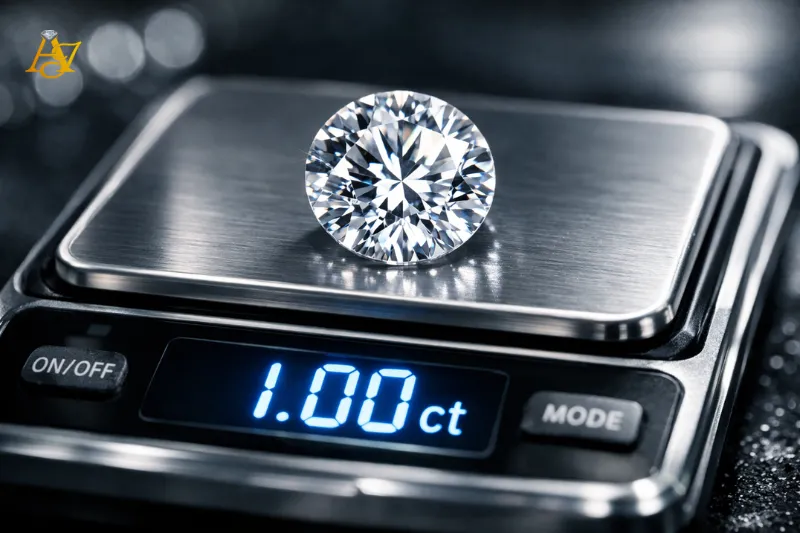
What Does Carat Mean?
Carat, written as Ct, is used to measure the weight of gemstones.
It does not tell you anything about gold purity.
This term is used for diamonds and other stones like rubies and emeralds.
One carat equals 200 milligrams.
Example of Carat Weights
| Carat | What It Means |
| 0.50 Ct | Half carat stone |
| 1.00 Ct | One carat stone |
| 2.00 Ct | Two carat stone |
A higher carat number means a heavier stone, not better gold.
How Can You Avoid This Confusion?
Here are a few simple steps:
- Always check if the price is for gold purity or stone weight.
- Read the bill carefully and look for separate gold and gemstone details.
- Ask the jeweller to explain both clearly before making payment.
- Remember this easy rule: Karat is for gold. Carat is for stones.
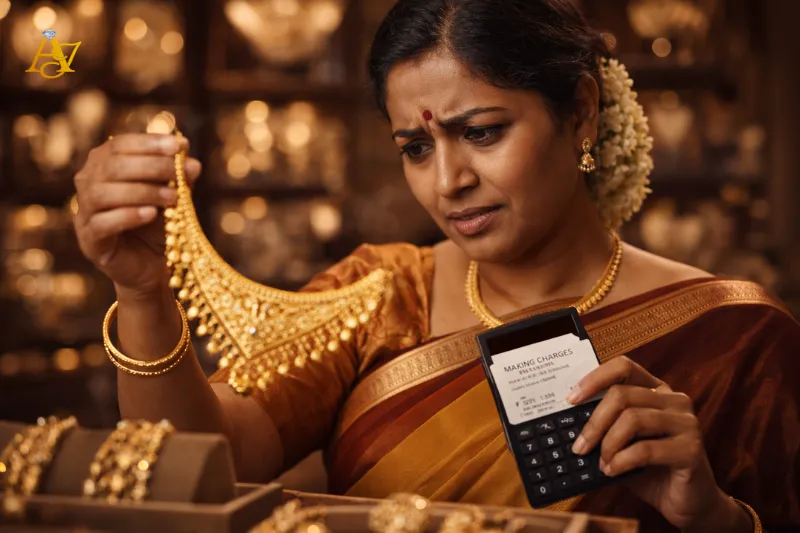
Are You Ignoring Making Charges While Buying Gold?
Many buyers focus only on the daily gold rate and forget about making charges. Ignoring making charges is one of the biggest reasons people overpay for gold jewellery.
Making charges can range from 8% to 25% or more depending on design complexity and brand value. If you do not check this separately, your final bill may be much higher than expected.
What Are Making Charges in Gold Jewellery?
Making charges are the labour costs involved in crafting jewellery from raw gold.
These charges vary based on:
- Design intricacy
- Handcrafted or machine-made work
- Brand premium
- Antique or temple finishing
They are usually non-refundable during resale.
How Much Can Making Charges Increase Your Final Bill?
Even a small percentage significantly affects the total cost.
For example, if gold value is ₹1,00,000 and making charge is 20%, you pay ₹20,000 extra before GST.
Types of Making Charges
| Type of Charge | How It Is Calculated | Advantage | Risk |
| Percentage-Based | % of total gold value | Easy to calculate | Increases when gold price rises |
| Fixed Rate Per Gram | Fixed amount per gram | Predictable pricing | May be high for heavy designs |
Understanding the type helps you compare better.
How Can You Avoid Overpaying Making Charges?
You can avoid this mistake by asking clear questions before making payment.
Step-by-Step Checklist
Ask for making charges separately on the bill.
- Confirm whether it is percentage-based or fixed-rate.
- Compare making charges across 2 to 3 jewellers.
- Ask if there are any offers or discounts.
- Understand resale deduction policy.
Following these steps protects your investment value.

Are You Comparing Today's Gold Rate Before Buying?
Many buyers purchase jewellery without checking the current gold rate.
Not comparing today's gold rate can cause you to overpay for the same gold.
Gold prices fluctuate daily based on international markets, currency value, and demand. Even a small difference per gram can significantly increase your final bill.
Why Do Gold Prices Change Every Day?
Gold rates are influenced by multiple market factors.
These include:
- International bullion prices
- Rupee to dollar exchange rate
- Import duties
- Market demand and supply
Because of this, yesterday's price may not be valid today.
How Much Difference Can Daily Rate Changes Make?
Even a ₹100 difference per gram matters.
For example, if you buy 25 grams and the rate is ₹100 higher than market price, you pay ₹2,500 extra.
How Can You Check Today's Gold Rate Correctly?
Checking properly takes only a few minutes.
Step-by-Step Checklist
- Check the live gold rate in your city.
- Confirm whether the rate is for 22K or 24K gold.
- Compare prices across trusted jewellers.
- Ask whether GST is included in the displayed rate.
- Ensure the same rate appears clearly on your invoice.
This simple process prevents unnecessary overpayment.
Should You Rely Only on the Jeweller's Displayed Rate?
Relying on only one source is risky.
It is better to verify rates from:
- Reputed jewellery stores
- Official bullion associations
- Trusted financial news platforms
Cross-checking ensures transparency and fair pricing.

Are You Asking About Buyback or Exchange Before Buying Gold?
Many buyers focus only on design and price and forget to ask what happens later.
Not asking about buyback or exchange policy can reduce your gold's future value.
Gold is often purchased with long-term flexibility in mind. Without clarity on resale terms, you may face unexpected deductions.
Why Is Buyback Policy Important?
Gold jewellery is frequently exchanged during upgrades or financial needs.
Each jeweller has different policies for:
- Buyback percentage
- Making charge deductions
- Stone weight deductions
- Bill requirement
Understanding these conditions protects your investment.
What Happens If You Do Not Check the Exchange Terms?
If policies are unclear, you may receive less value than expected.
Some jewellers deduct:
- Full making charges
- Wastage percentage
- Stone weight
- Testing charges
These deductions directly affect the resale amount.
How Do Buyback and Exchange Policies Differ?
Not all policies are the same. Some offer better value than others.
| Policy Type | What Is Returned | Common Deductions | Risk Level |
| Full Buyback | Based on current gold rate | Minimal deduction | Low |
| Partial Buyback | Gold value only | Making charges + wastage | Medium |
| Exchange Only | Adjusted against new purchase | Making charges deducted | Medium |
| No Bill Case | Lower rate offered | Testing + purity deduction | High |
Always clarify before purchasing.
What Should You Ask Before Final Payment?
Asking simple questions can prevent future loss.
Step-by-Step Checklist
- What percentage of the current gold rate is offered for buyback?
- Are making charges refundable?
- Is the original bill mandatory?
- Are stones deducted fully during resale?
- Are there any additional testing or melting charges?
Are You Buying Gold Only for Trend and Not for Value?
Festive offers and trendy designs often trigger impulse buying.
Buying gold only for trend without considering value can reduce long-term resale benefits.
Lightweight and highly fashionable jewellery may look attractive today. But it may not always give strong returns tomorrow.
Why Is Trend-Based Gold Buying Risky?
Trendy jewellery is usually design-focused rather than investment-focused.
These pieces often:
- Have high making charges
- Contain more design work than gold weight
- Include stones or decorative elements
- Offer lower resale returns
When fashion changes, resale demand may also reduce.
What Is the Difference Between Trend Jewellery and Value Jewellery?
Understanding the difference helps you choose wisely.
| Factor | Trend-Based Jewellery | Value-Focused Jewellery |
| Design | Modern and fashionable | Classic and timeless |
| Gold Weight | Often lightweight | Moderate to heavy |
| Making Charges | Usually higher | More controlled |
| Resale Value | May be lower | Generally stronger |
| Purpose | Style statement | Long-term asset |
Balancing both style and value is the smart approach.
How Can You Balance Emotion and Practical Thinking?
Gold buying is emotional, especially during festivals and weddings.
But asking a few simple questions can prevent regret.
Step-by-Step Self-Check
- Is this jewellery for daily wear or occasional use?
- Is this purchase mainly for investment?
- Will resale or exchange matter later?
- Are making charges reasonable for this design?
- Does the gold weight justify the price?
This checklist helps you think beyond impulse.
Final Thoughts: Are You Buying Gold the Right Way?
Gold buying should feel joyful, not stressful. You are buying gold the right way when you verify purity, understand pricing, and think about long-term value before deciding. Avoiding common Gold Buying Mistakes helps ensure that your purchase remains both financially secure and emotionally meaningful.
Before your next purchase, ask yourself: Am I buying gold with clarity, or am I repeating common Gold Buying Mistakes?
If you are planning to explore gold this festive season, take a moment to understand purity, pricing, and resale value. Learning about Gold Buying Mistakes in advance can protect your investment. Explore educational gold insights at Alfa Jewellers to make informed and confident decisions.




Article
Common Gold-Buying Mistakes and How to Avoid Them
Buying gold is both emotional and financial. Discover the most common gold-buying mistakes and learn how to verify purity, compare rates, understand making charges, and protect your long-term value before the purchase.