

Thinking about buying gold in India or jewellery but not sure where to start? This jewellery buying guide in India will help you understand what to check before purchasing gold, silver, or diamond jewellery.
Buying jewellery in India is never just about fashion. It is emotional. It is about family, tradition, weddings, and special moments. At the same time, it is also about money, as many people see jewellery as a form of saving and long-term financial security.
The reason you are buying jewellery makes a big difference. Jewellery for daily wear should be strong and practical, while wedding jewellery is usually heavier and more detailed. Festival purchases, especially during occasions like Akshaya Tritiya or Diwali, are often linked to good luck and prosperity. Investment jewellery, on the other hand, should focus more on purity and resale value rather than design.
In this complete jewellery buying guide in India, you will learn the difference between buying for daily wear, weddings, festivals, and investment. You will also understand how to choose between gold, silver, and diamonds, what to check before paying, and how to avoid common mistakes when buying gold in India.
Why Is Gold So Popular in India?
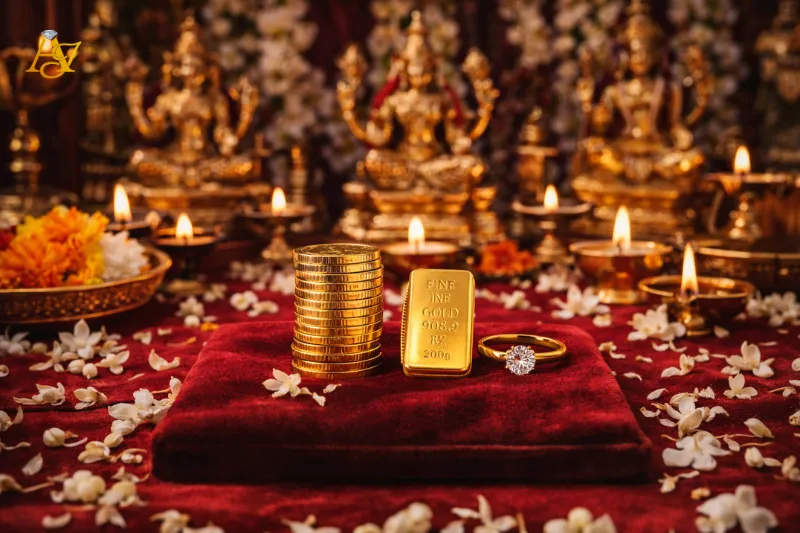
Gold is extremely popular in India because it combines cultural significance, financial security, and emotional value. Buying gold in India is a long-standing tradition, as people purchase gold not only for jewellery but also as a reliable way to preserve wealth and celebrate important life events.
Why Do Indians Buy Gold for Weddings and Festivals?
Gold jewellery plays a major role in Indian celebrations. Weddings, festivals, and family events often involve buying or gifting gold as a symbol of prosperity and blessings.
Many families believe purchasing gold during festivals such as Akshaya Tritiya and Diwali brings good fortune and long-lasting wealth.
Common occasions for buying gold include:
- Weddings and bridal jewellery
- Festival purchases
- Birth celebrations
- Family gifting traditions
Why Is Gold Considered a Safe Investment in India?
Gold has historically been seen as a stable and trusted store of value. Unlike some financial investments, it is a physical asset that people can easily store, sell, or pledge for a loan.
Many investors prefer gold because it helps protect savings during inflation or economic uncertainty.
Key Investment Benefits of Gold
| Benefit | Explanation |
| Long-Term Value | Gold tends to maintain value over time |
| Easy Liquidity | It can be sold quickly when cash is needed |
| Hedge Against Inflation | Gold often performs well during economic uncertainty |
| Financial Backup | Can be used as collateral for gold loans |
How Do Families Use Gold as Generational Wealth?
In many Indian households, gold jewellery represents more than personal style. It is often treated as family wealth that can be passed from one generation to the next.
Parents frequently gift gold jewellery to their children during weddings or special milestones. Over time, this creates a legacy of wealth and tradition within the family.
How Can You Buy Gold Safely in India?
Before purchasing gold jewellery, buyers should follow a few simple steps to ensure authenticity and value.
Steps to Buy Gold Safely
- Check the Bureau of Indian Standards hallmark on the jewellery.
- Verify the gold purity (22K, 18K, etc.).
- Ask the jeweller about making charges and additional costs.
- Request a proper bill with full product details.
- Understand the buyback or exchange policy.
Following these steps helps ensure that you are purchasing genuine and fairly priced gold jewellery.
Why Do People Continue to Buy Gold in India?
Gold remains popular in India because it offers a unique combination of tradition, beauty, and financial security. Whether purchased for weddings, festivals, or savings, gold continues to be one of the most trusted and meaningful assets for Indian families.

Choosing Between 22K and 18K Gold: What Every Buyer Should Know
22K gold and 18K gold differ mainly in purity, durability, and how they are used in jewellery. When buying gold in India, understanding these differences helps you choose the right type of gold for your needs.
22K gold contains about 91.6% pure gold and is commonly used for traditional jewellery. 18K gold contains 75% pure gold and is stronger, which makes it more suitable for diamond jewellery and modern designer pieces.
Understanding these differences helps buyers choose the right type of gold based on style, durability, and long-term value when buying gold in India.
What Does “Karat” Mean in Gold?
Karat (K) refers to the amount of pure gold present in a piece of jewellery. Pure gold is measured as 24 karats, meaning it contains almost entirely gold.
Since pure gold is very soft, jewellers mix it with metals like copper, silver, or zinc to make jewellery stronger. As more metals are added, the karat value decreases.
Common Gold Purity Levels
- 24K gold: 99.9% pure gold, mainly used for coins and bars
- 22K gold: 91.6% gold mixed with small amounts of other metals
- 18K gold: 75% gold with a higher percentage of alloy metals
These additional metals improve strength and durability, making the jewellery suitable for regular use.
How Does 22K Gold Compare to 18K Gold?
The biggest differences between 22K and 18K gold involve purity, strength, appearance, and usage.
| Feature | 22K Gold | 18K Gold |
| Gold Purity | 91.6% gold | 75% gold |
| Alloy Metals | 8.4% | 25% |
| Durability | Softer metal | Stronger and more durable |
| Colour | Rich yellow tone | Slightly lighter yellow |
| Best For | Traditional jewellery | Diamond and designer jewellery |
This comparison helps buyers quickly understand which type of gold fits their needs.
Why Do Many People Choose 22K Gold for Jewellery?
22K gold is widely used in India for traditional and wedding jewellery because of its higher gold content.
Advantages of 22K Gold
- Higher gold purity
- Strong resale value
- Rich and classic gold colour
- Popular for wedding jewellery and bangles
However, because it is softer than 18K gold, it may bend or scratch more easily, especially in delicate designs.
Why Is 18K Gold Often Used for Diamond Jewellery?
18K gold contains more alloy metals, which increases its strength and durability.
Benefits of 18K Gold
- Better support for diamonds and gemstones
- Suitable for intricate designs
- More resistant to bending or scratching
- Ideal for daily wear jewellery
For this reason, many jewellers prefer 18K gold for engagement rings and modern jewellery styles.
Is 22K Gold Better Than 18K Gold for Investment?
Yes, 22K gold is generally considered better for investment because it contains a higher percentage of pure gold. Jewellery made from 22K gold usually retains more intrinsic gold value.
However, buyers should remember that making charges and design costs are typically not recovered during resale, regardless of the gold purity.
What Are Making Charges in Gold Jewellery?
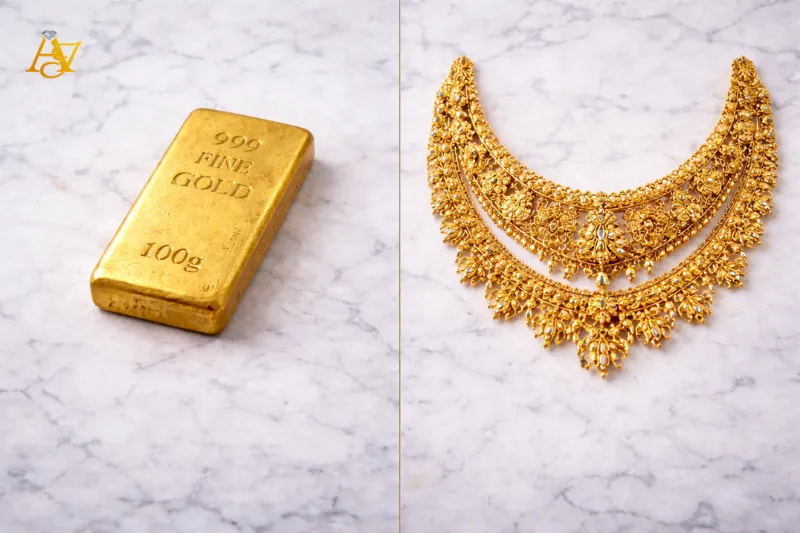
Making charges refer to the additional amount jewellers charge for the design, labour, and craftsmanship required to create gold jewellery.
They cover the labour, craftsmanship, and design work required to transform raw gold into finished jewellery.
Knowing how making charges work allows buyers to understand how the final jewellery price is calculated and helps them compare costs between different jewellery stores.
Why Do Jewellers Charge Making Charges?
Gold jewellery pricing depends on several factors, not only the weight and purity of the gold used. Skilled artisans spend time shaping, designing, and finishing each piece.
Making charges usually cover:
- Labour involved in crafting the jewellery
- Design and detailing work
- Polishing and finishing
- Tools and manufacturing costs
Intricate jewellery designs often require more craftsmanship, which can lead to higher making charges.
How Are Making Charges Calculated?
| Calculation Method | How It Works |
| Percentage-based | A percentage of the gold price is added as labour cost |
| Per gram rate | Fixed cost charged per gram of gold |
| Fixed total charge | A flat making cost for the entire piece |
What Factors Affect Making Charges?
Making charges can vary widely depending on several factors.
Common factors include:
- Design complexity: Intricate designs require more labour
- Type of jewellery: Complex pieces like bangles, necklaces, and bridal collections often require more craftsmanship, leading to higher making costs
- Brand reputation: Well-known brands may charge higher making fees
- Handmade vs machine-made jewellery: Handmade jewellery usually costs more
Understanding these factors helps buyers evaluate whether the charges are reasonable.
How Can You Reduce Making Charges When Buying Gold?
Buyers can sometimes lower the overall cost by choosing simpler designs or comparing multiple jewellers.
Steps to reduce making charges
- Compare jewellery prices from different stores
- Ask if the jeweller offers discounts on making charges
- Choose simple designs instead of intricate patterns
- Buy during festive offers when making charges are reduced
- Many jewellery stores offer special discounts during festivals and wedding seasons.
Key Things to Check Before Paying Making Charges
Before buying gold jewellery, always review the price breakdown.
Important things to verify
- Gold weight and purity
- Current gold rate per gram
- Making charges applied
- GST added to the bill
- Stone charges if gemstones are included
A transparent bill ensures you understand exactly what you are paying for.
When Is the Best Time to Buy Gold in India?
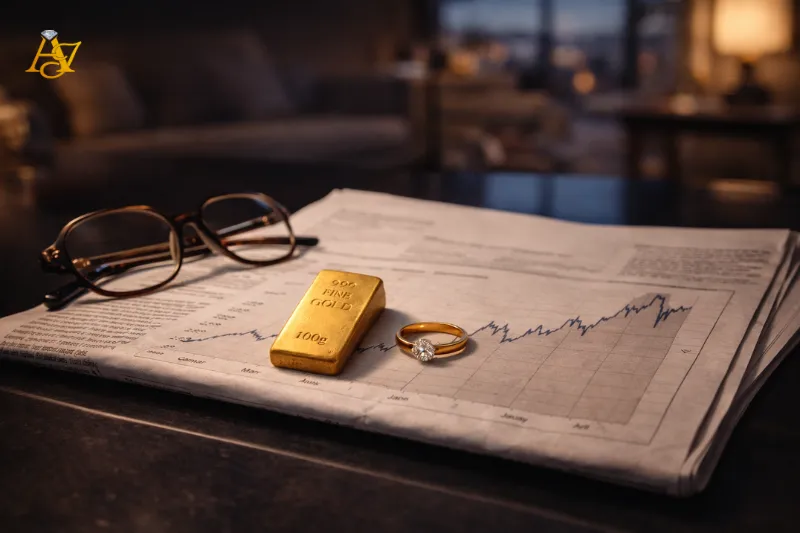
The best time to buy gold in India is usually during festive seasons, special offers, or when gold prices temporarily drop.
Many buyers also purchase gold during traditional occasions because it is considered auspicious and culturally significant.
Knowing when to buy gold can help you save money, find better designs, and take advantage of discounts on making charges.
Why Do Many People Buy Gold During Festivals?
In India, gold buying is strongly connected to cultural traditions and celebrations. Certain festivals are believed to bring prosperity and good fortune, making them popular times to purchase gold jewellery.
Common reasons people buy gold during festivals
- Belief that gold buying brings prosperity
- Family traditions and rituals
- Special jewellery offers and discounts
- Wedding and gifting seasons
Because of these factors, jewellery stores often launch special festive collections and promotions.
Which Festivals Are Popular for Buying Gold?
Several festivals in India are considered especially favourable for purchasing gold jewellery.
| Festival | Why People Buy Gold |
| Akshaya Tritiya | Believed to bring wealth and prosperity |
| Dhanteras | Traditional day for buying precious metals |
| Deepavali | Symbolises prosperity and new beginnings
|
| Wedding Season | Gold jewellery is an essential part of weddings |
During these occasions, jewellers often offer reduced making charges or promotional discounts.
Is Buying Gold at a Lower Price a Smart Choice?
Yes, buying gold when the market price is lower can help you save money, especially if you are purchasing larger quantities.
Gold prices change due to several factors:
- Global economic conditions
- Currency exchange rates
- Demand and supply in the market
- Inflation and investment trends
Checking the daily gold rate before purchasing can help you choose the right time to buy.
Final Thoughts
Buying gold in India is a meaningful experience that combines tradition, beauty, and financial value. Understanding the difference between 22K and 18K gold, learning how making charges are calculated, and checking for BIS hallmark certification can help you make a more informed and confident decision.
Whether you are purchasing jewellery for a wedding, festival, or long-term savings, choosing the right type of gold ensures that your investment remains valuable over time.
If you're planning to learn more about gold jewellery, explore our jewellery guides and expert insights at Alfa Jewellers to make smarter gold-buying decisions.




Article
How to Buy Gold in India: 22K vs 18K, Making Charges & Investment Guide
Planning to buy gold in India? This guide explains the difference between 22K and 18K gold, how making charges work, and what to check before purchasing jewellery. Learn practical tips to choose the right gold for tradition, daily wear, or investment.