

Why is it important to understand gold hallmark symbols in India before buying jewellery? Because when you invest in gold jewellery, you are protecting your money, trust, and long-term value. Learning how to read gold hallmark symbols in India helps you verify purity, avoid overpaying, and stay safe from fake or low-quality gold. Before you buy, knowing these symbols ensures your jewellery is genuine, certified, and worth every rupee you spend.
Buying gold jewellery is an emotional and financial investment. Before purchasing, understanding gold hallmark symbols in India is essential to ensure purity and authenticity. Many buyers ignore gold hallmark symbols in India, but these small markings protect you from fraud and under-carat gold.

What Is Gold Hallmarking in India?
When talk about gold hallmark symbols in India, we are referring to the official certification marks that confirm your jewellery’s purity and authenticity. These markings are regulated by the Bureau of Indian Standards to ensure that buyers receive genuine and accurately tested gold.
In India, gold represents savings, security, and family tradition. Because gold plays such an important role in people’s lives, hallmarking was made mandatory in June 2021. Today, most gold jewellery sold in the country must carry proper gold hallmark symbols in India, giving buyers confidence, transparency, and protection against fraud.
Why Is Gold Hallmarking Important for Buyers?
Gold hallmarking protects customers from fraud and under-karating. It ensures that the gold purity mentioned on the bill matches the actual purity of the ornament.
Without hallmarking, buyers may unknowingly pay for lower purity gold. Hallmarking builds trust, transparency, and resale confidence.
Key Benefits:
- Confirms gold purity (22K, 18K, etc.)
- Reduces risk of fraud
- Ensures nationwide quality standards
- Makes resale and exchange easier
Who Oversees Gold Hallmarking in India?
Gold hallmarking in India is looked after by the Bureau of Indian Standards (BIS). BIS is the government body that makes sure products meet proper quality standards.
Only jewellers who are registered with BIS can sell hallmarked gold jewellery. Each hallmarked item comes with a unique HUID number, which helps buyers check that the gold is genuine and matches the purity promised.
What Marks Appear on BIS Hallmarked Gold Jewellery?
Authentic hallmarked gold jewellery carries a set of official symbols. These markings confirm that the ornament has been tested, certified, and approved according to BIS standards.
Key BIS Hallmark Elements:
- BIS Certification Logo
- Purity or Fineness Mark (for example, 22K916 or 18K750)
- Mark of the Authorised Assaying & Hallmarking Centre
- Registered Jeweller's Identification Mark
- HUID Number (Hallmark Unique Identification Code)
These symbols together ensure transparency, purity assurance, and protection for gold buyers in India.
What Do BIS Hallmark Symbols Mean?
| Hallmark Symbol | Meaning | Why It Matters |
| BIS Logo | Certified by Bureau of Indian Standards | Confirms government approval |
| 22K, 916 / 18K, 750 | Indicates gold purity | Assures correct karat value |
| Assay Centre Mark | Tested at authorised centre | Ensures proper purity testing |
| Jeweller ID Mark | Registered seller code | Identifies the jeweller |
| HUID Number | Unique 6-digit alphanumeric code | Prevents duplication and fraud |
How Can You Check If Your Gold Is Hallmarked?
Follow this simple checklist before buying gold:
- Look for the BIS logo on the jewellery.
- Check the purity marking (22K916, 18K750, etc.).
- Verify the HUID number on the ornament.
- Ask for a proper bill mentioning purity.
- Confirm the jeweller is BIS registered.
Taking these steps ensures you are buying genuine hallmarked gold.
When Did Hallmarking Become Mandatory in India?
Hallmarking was voluntary before June 2021. The Government of India made it mandatory in phases starting June 2021.
Today, most gold jewellery sold in India must carry a valid BIS hallmark with HUID.
Why Gold Hallmarking Matters for Every Buyer?
Gold hallmarking in India is an official BIS certification system that ensures the purity, authenticity, and traceability of gold jewellery through standardised markings and a unique identification number.

How to Check Gold Purity Numbers Like 22K/916?
Gold purity numbers like 22K/916 show how much pure gold is in your jewellery, and you can check them by understanding the karat and fineness marking stamped on the piece.
When buying gold in India, you will usually see both a karat number (like 22K) and a three-digit number (like 916). These markings help you confirm the purity before making a purchase.
What Does 22K916 Actually Mean?
22K means the gold is made up of 22 parts gold out of 24 parts.
916 means the gold is 91.6% pure. It is simply the percentage written in a three-digit format.
So, 22K916 and 91.6% purity mean the same thing.
How Are Gold Purity Numbers Calculated?
Gold purity is measured out of 24 parts.
The simple formula is:
(Karat ÷ 24) × 100 = Purity Percentage
For example:
22 ÷ 24 × 100 = 91.6%
18 ÷ 24 × 100 = 75%
14 ÷ 24 × 100 = 58.5%
This percentage is then shown as 916, 750, or 585.
What Are the Common Gold Purity Numbers in India?
Different purity levels are used for different types of jewellery.
| Karat | Fineness Number | Purity % | Common Use |
| 24K | 999 | 99.9% | Gold coins & bars |
| 22K | 916 | 91.6% | Traditional jewellery |
| 18K | 750 | 75% | Diamond jewellery |
| 14K | 585 | 58.5% | Light daily wear |
This table makes it easier to compare purity at a glance.
Where Can You Find the Purity Mark on Jewellery?
The purity number is usually stamped in a small area on the jewellery.
You can often find it:
- Inside a ring band
- On the clasp of a chain
- On the inner side of a bangle
- On the back of a pendant
It is normally stamped near the BIS hallmark and HUID number.
How to Read and Confirm Gold Purity Marks Before Buying
You can check gold purity numbers like 22K916 by understanding that they show the karat and percentage of pure gold, and by verifying the BIS hallmark and HUID before purchase.

What Happens If Jewellery Has No Hallmark?
If jewellery has no hallmark, there is no official proof that the gold purity matches what the seller claims.
Hallmarking is meant to protect buyers. Without it, you rely only on trust, not certification.
Is It Risky to Buy Jewellery Without a Hallmark?
Yes, it can be risky because the gold may not be the purity you are paying for.
Without official testing, there is no guarantee that 22K is truly 22K. This can affect both value and resale price later.
Is It Legal to Sell Gold Without a Hallmark in India?
Since June 2021, hallmarking has been mandatory for most gold jewellery sold in India.
Jewellers who sell required items without a BIS hallmark may face penalties. However, some old or exempt items may not carry hallmarking.
What Problems Can Non-Hallmarked Jewellery Cause?
Buying non-hallmarked gold can lead to confusion and financial loss.
Common Issues:
- Lower purity than promised
- Difficulty during resale or exchange
- No official purity proof
- Possible pricing disputes
- Reduced buyer confidence
These problems can often be avoided by checking for BIS marks.
How Is Hallmarked Jewellery Different from Non-Hallmarked Jewellery?
| Feature | Hallmarked Jewellery | Non-Hallmarked Jewellery |
| Purity Tested | Yes, by BIS-approved centre | Not officially tested |
| BIS Logo | Present | Not present |
| HUID Number | Available | Not available |
| Buyer Protection | Stronger | Weaker |
| Resale Confidence | Higher | Lower |
This table clearly shows the added security of hallmarked gold.
Why Buying Non-Hallmarked Jewellery Can Be Risky
Jewellery without a hallmark carries no certified proof of purity, which means you may pay for gold that does not meet the quality promised.

What Are the Most Common Mistakes Buyers Make When Purchasing Gold?
The most common mistakes buyers make include not checking the hallmark, trusting verbal purity claims, and ignoring invoice details.
Buying gold is a serious financial decision. Small oversights at the time of purchase can lead to long-term loss.
Do Buyers Trust Verbal Purity Claims Too Easily?
Many buyers accept what the seller says without checking written proof.
Purity should never be confirmed by words alone. Always verify it through official markings and proper documentation.
Are You Forgetting to Check the Hallmark Stamp?
Some buyers focus only on design and price.
If you do not check for the BIS logo and HUID number, you have no official confirmation of purity.
Are Invoice Details Being Ignored?
The bill is just as important as the jewellery.
Make sure the invoice clearly mentions:
- Karat (22K, 18K, etc.)
- Fineness number (916, 750, etc.)
- Net gold weight
- Making charges
- GST amount
Clear billing helps during resale or exchange.
Is All Jewellery Automatically Hallmarked?
No, not every piece should be assumed to be hallmarked.
Although hallmarking is mandatory for most gold jewellery in India, buyers must still physically check for BIS markings.
Is KDM the Same as a Hallmark?
Many people confuse KDM with BIS hallmark certification.
| Feature | KDM Marking | BIS Hallmark |
| Meaning | Old soldering method | Official purity certification |
| Government Approved | No | Yes |
| Purity Guarantee | No | Yes |
| HUID Number | Not available | Available |
KDM does not confirm purity. Only BIS hallmark provides certified assurance.
How to Avoid Costly Mistakes When Buying Gold
Buyers can avoid costly gold purchasing mistakes by verifying the BIS hallmark, checking invoice details, and not relying solely on verbal claims.
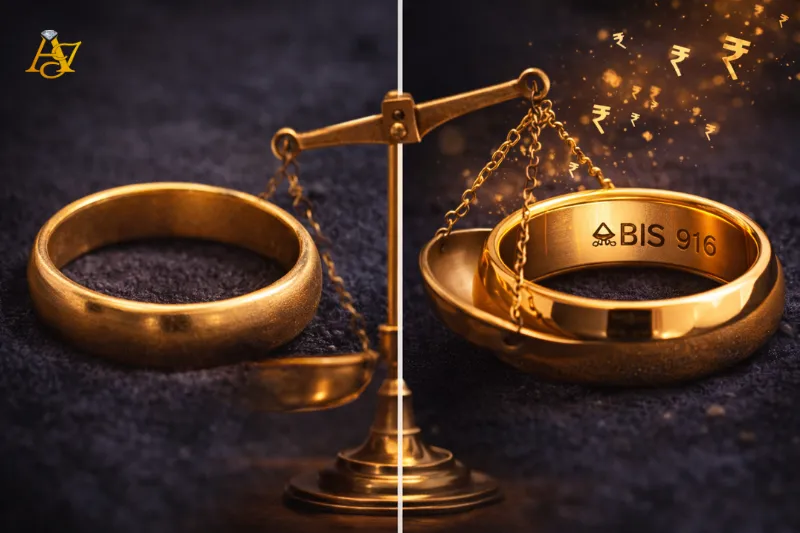
Is Hallmarked Gold More Expensive?
No, hallmarked gold is not significantly more expensive because the certification fee is very small compared to the total jewellery cost.
The main price of gold depends on weight and the daily market rate. Hallmarking only adds a minor testing charge while protecting your full investment.
Does Hallmarking Increase the Daily Gold Rate?
No, hallmarking does not affect the market gold rate.
Gold prices are decided by global and local market trends. The hallmark only confirms purity and does not change the base rate.
What Extra Charges Do You Pay for Hallmarked Gold?
When buying hallmarked jewellery, your bill may include:
- Gold value (based on weight and rate)
- Making charges
- GST
- Small hallmark certification fee
The hallmark fee is usually minimal but gives official proof of purity.
Is the Extra Cost Worth It?
Yes, the small certification charge gives long-term benefits.
It reduces the risk of under-purity and improves resale confidence. In most cases, the value gained is far greater than the extra cost paid.
Why Hallmarked Gold Offers Better Value for Your Money
Hallmarked gold is not truly more expensive, as the small certification fee provides guaranteed purity and better long-term value.
Final Thoughts
Before choosing gold jewellery in India, always take a moment to check the BIS logo, purity mark, and HUID number. Understanding these simple details helps protect your investment and ensures you know exactly what you are paying for.
Gold holds emotion, security, and long-term value for generations.
Stay informed. Check purity. Choose wisely.
If you would like to learn more about gold hallmarking and smart gold buying, explore more helpful guides and insights at Alfa Jewellers.




Article
Learn How to Read Gold Hallmark Symbols in India Before Buying Jewellery
Planning to buy gold jewellery? Learn how to read BIS hallmark symbols like 22K/916, purity marks, and HUID numbers to ensure you get genuine, certified gold in India.